Table of Content
On this page you'll find information about the tax deductions available for improving the energy efficiency of commercial buildings. The table below provides a summary of the Energy Policy Act of 2005 (Public Law ) provisions related to alternative fuels and vehicles, air quality, fuel efficiency, and other transportation topics. Note that although legislation authorizes funding for activities, the funds still must be appropriated through a separate federal budgeting process. This is especially a concern as the incentives for commercial buildings are one of the fastest ways in the entire energy bill that we can cut down the nation’s energy usage in the short term. For solar hot water systems, the allowable tax credit is 30% of the qualified solar system expenditures up to a maximum tax credit limitation of $2,000. The collective reduction in national consumption of oil is significant for automotive vehicles.
Similar standards exist in Florida and elsewhere under the auspices of Florida’s Building Energy Rating System and under the national standards of the national Residential Energy Services Network . The solar and energy efficiency provisions are found in Title XIII, Subtitle C, beginning on page 1332 page 1390 of the act. Review of EPAct of 1992 Requires DOE to submit a report to Congress 180 days after EPAct 2005 enactment. This legislation replaces the Tax Deduction Timeline for the refueling property tax deduction extended by the Working Families Tax Relief Act of 2004. We are committed to this as the correct policy for large scale commercial projects.
Prosecutors Contact Dem, GOP Recipients Of Money From FTX's Sam Bankman-Fried: Report
The expiration of this tax credit represents a step backwards for the residential energy efficiency movement. There is an important difference between a tax deduction and a tax credit. A tax deduction is subtracted from income before total tax liability is computed. On the other hand, a tax credit is subtracted directly from the total tax liability. This means that a deduction and a credit have very different values, with a credit being 3 or more times more advantageous to the taxpayer than a deduction. For example, a tax credit of $1,000 for someone in the 28% tax bracket is equivalent to a tax deduction of $3,571.

Populus guides architects and builders through the requirements of mandatory green building codes and optional green home certification programs, providing HERS rating, LEED for Homes Green Rater services and municipal energy code consulting. In addition, Populus offers an Energy Code Workshop for architects and municipalities, as well as LEED for Homes training. EAEI researchers provide unbiased, scientific, high quality and innovative research and technical assistance to government agencies in the United States and throughout the world.
Extension of Energy Investment Tax Credits
The law did not include provisions for drilling in the Arctic National Wildlife Refuge ; some Republicans claimed "access to the abundant oil reserves in ANWR would strengthen America's energy independence without harming the environment." Currently, taxpayers generally recover the cost of smart electric meters and smart electric grid equipment over a 20-year period. This act allows taxpayers to recover the cost of this property over a 10-year period, unless the property already qualifies for a shorter recovery schedule. For microturbines, a tax credit of 10% of the expenditure with a credit limitation of $200/kW. A larger tax credit is available for homes that are certified to DOE’s Zero Energy Ready Program, which requires ENERGY STAR certification as a prerequisite. The credit will phase out after a manufacturer has sold 60,000 qualified vehicles.
The Act provided tangible financial incentives for operators of hybrid vehicles. It helped fuel competition among auto makers to meet rising demands for fuel-efficient vehicles. Industry grew for manufacture of these environmentally positive improvements.
Renewable Fuels Trader
The 30% investment tax credits for solar energy and qualified fuel cell properties are extended to January 1, 2017. The 30% ITC now also applies to qualified small wind energy property. The cap for qualified fuel cells increased to $1,500 per half kilowatt of capacity. Finally, a new 10% ITC is available for combined heat and power systems and geothermal heat pumps. The Energy Policy Act of offered businesses tax deductions for the costs of improving the energy efficiency of commercial buildings.
Up to $.60 for lighting, $.60 for HVAC and $.60 for building envelope, creating a potential deduction of $1.80 per sq/ft. Interior lighting may also be improved using the Interim Lighting Rule, which provides a simplified process to earn the Deduction, capped at $0.30-$0.60/square foot. In the case of a new home for example, the builder may claim credit for the high efficiency home and the homeowner may claim tax credits for solar hot water and photovoltaic and fuel cell systems. Other financial incentives, such as utility or SunBuilt rebates, further reduce the cost of building or owning a solar and energy efficient home. In the case of a new home for example, the builder may claim credit the high efficiency home and the homeowner may claim tax credits for solar hot water and photovoltaic and fuel cell systems.
Fuel Cells and Microturbines Used in a Business
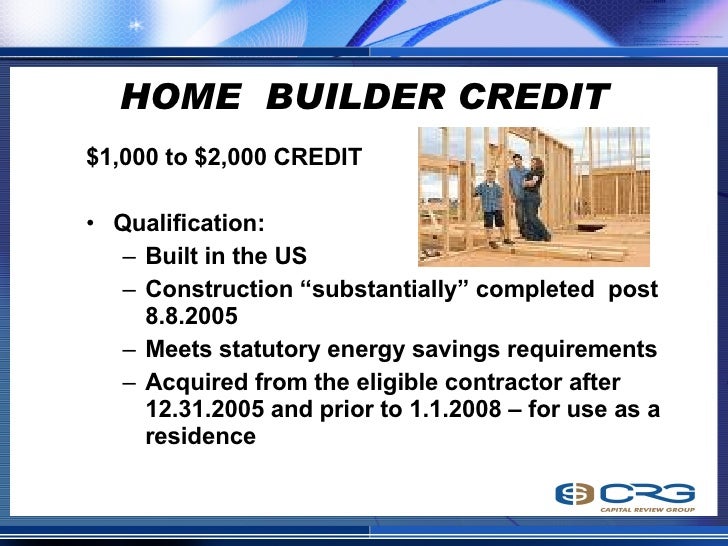
The non-federal cost share is at least 20% of infrastructure and 50% of vehicle costs. It is imperative that builders, energy raters and building professionals let their representatives know how important this tax credit has been to their clients over the last few years and how effectively it has promoted high-performance home construction. For years now, builders could claim a $2,000 tax credit for building energy efficient homes that met certain above-code requirements under the Energy Policy Act of 2005 (or "EPAct") Builders Tax Credit. This tax credit has been effective at incentivizing builders to increase the energy performance of homes and has supported job growth in the home performance industry by promoting the sale of above-code systems and the utilization of home energy raters.
This section of the act is controversial; some have questioned whether daylight saving results in net energy savings. George W. Bush signing the Energy Policy Act of 2005, which was designed to promote US nuclear reactor construction, through incentives and subsidies, including cost-overrun support up to a total of $2 billion for six new nuclear plants. Manufactured Homes - $2,500 available for ENERGY STAR certified manufactured homes meeting the most recent ENERGY STAR Manufactured New Homes program requirements (currently Version 2, with Version 2.1 currently proposed to be implemented in May 2023).
We then calculate the incremental value of EPAct's new and expanded credits for PV systems of different sizes, and owned by different types of entities. We conclude with a discussion of potential implications for purchasers of PV systems, as well as for administrators of state/utility PV programs. The market for grid-connected photovoltaics in the US has grown dramatically in recent years, driven in large part by PV grant or "buy-down" programs in California, New Jersey, and many other states. Using a generic (i.e., non-state-specific) cash flow model, this report explores these questions. We begin with a discussion of the taxability of PV grants and their interaction with federal credits, as this issue significantly affects the analysis that follows. §179D includes full and partial tax deductions for investments in energy efficient commercial building that are designed to increase the efficiency of energy-consuming functions.
The most consequential aspect of the law was to greatly increase ethanol production to be blended with gasoline. The law also repealed the Public Utility Holding Company Act of 1935, effective February 2006. For solar photovoltaic systems, the allowable tax credit is 30% of the qualified PV system expenditures up to a maximum tax credit limitation of $2,000. Eligible homes must demonstrate savings using software that has been approved by DOE and builders must demonstrate compliance by the use of third-party inspectors certified according to DOE rules.
Any metal roof having pigmented coatings specifically designed to reduce heat gain which meet Energy Star program requirements. Compliance is determined by third party inspectors who review the plans and the actual in-place construction. Energy savings are determined by software that must be certified by the Department of Energy as meeting criteria of consistency and accuracy, following the successful experience of California’s performance-based energy code enforcement. All official information related to the tax credit will be determined and published by the IRS. The ENERGY STAR team is committed to keeping our partners informed as the IRS works to develop updated documents and guidance. Update Fuel Economy Test ProceduresRequires EPA to evaluate and/or adjust fuel economy test procedures to reflect real-world driving scenarios .





No comments:
Post a Comment