Table of Content
For fuel cells, a tax credit of 30% of the expenditure up to a maximum of $500 per 500 watts of capacity. Each of the three energy-using systems of the building — the envelope, the heating, cooling and water heating system, and lighting system — is eligible for one third of the incentive if it meets its share of the whole-building savings goal. The Energy Policy Act of 2005 (Pub.L.109–58 ) is a federal law signed by President George W. Bush on August 8, 2005, at Sandia National Laboratories in Albuquerque, New Mexico. The act, described by proponents as an attempt to combat growing energy problems, changed US energy policy by providing tax incentives and loan guarantees for energy production of various types.
If you haven't already done so, email or call your representatives in Congress and let them know that you support tax credits for builders who build energy efficient homes that demonstrate above-code performance. Study of Reducing Use of Fuel for AutomobilesDirects NHTSA to study the feasibility and effects of significantly reducing petroleum consumed by automobiles by MY 2014. Fuel Cell School BusesEstablishes a DOE demonstration program involving fuel cell school bus manufacturers and at least two local government agencies currently using natural gas school buses.
Deduction of the Cost of Energy-Efficient Property Installed in Commercial Buildings
This section of the act is controversial; some have questioned whether daylight saving results in net energy savings. George W. Bush signing the Energy Policy Act of 2005, which was designed to promote US nuclear reactor construction, through incentives and subsidies, including cost-overrun support up to a total of $2 billion for six new nuclear plants. Manufactured Homes - $2,500 available for ENERGY STAR certified manufactured homes meeting the most recent ENERGY STAR Manufactured New Homes program requirements (currently Version 2, with Version 2.1 currently proposed to be implemented in May 2023).
To receive a waiver, fleets must prove to DOE that they will achieve petroleum reductions equivalent to AFVs running on alternative fuels 100% of the time. Clean Fuels Ohio - This site focuses on alternative fuels as well as alt-fuels incentives created by the Energy Policy Act of 2005. To obtain these benefits the facilities/energy division of a business, its tax department, and a firm specializing in EPAct 179D deductions needed to cooperate. IRS mandated software had to be used and an independent 3rd party had to certify the qualification. For municipal buildings, benefits were passed through to the primary designers/architects in an attempt to encourage innovative municipal design.
Medewerker Servicepunt Financiële Administratie
The law did not include provisions for drilling in the Arctic National Wildlife Refuge ; some Republicans claimed "access to the abundant oil reserves in ANWR would strengthen America's energy independence without harming the environment." Currently, taxpayers generally recover the cost of smart electric meters and smart electric grid equipment over a 20-year period. This act allows taxpayers to recover the cost of this property over a 10-year period, unless the property already qualifies for a shorter recovery schedule. For microturbines, a tax credit of 10% of the expenditure with a credit limitation of $200/kW. A larger tax credit is available for homes that are certified to DOE’s Zero Energy Ready Program, which requires ENERGY STAR certification as a prerequisite. The credit will phase out after a manufacturer has sold 60,000 qualified vehicles.

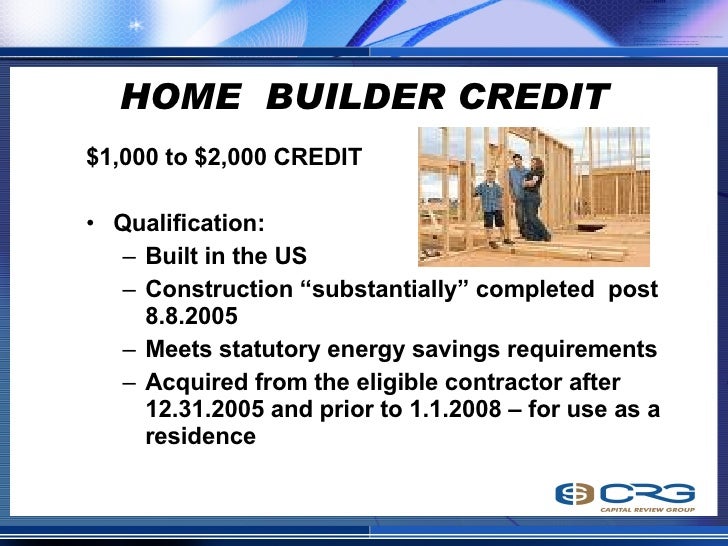
The non-federal cost share is at least 20% of infrastructure and 50% of vehicle costs. It is imperative that builders, energy raters and building professionals let their representatives know how important this tax credit has been to their clients over the last few years and how effectively it has promoted high-performance home construction. For years now, builders could claim a $2,000 tax credit for building energy efficient homes that met certain above-code requirements under the Energy Policy Act of 2005 (or "EPAct") Builders Tax Credit. This tax credit has been effective at incentivizing builders to increase the energy performance of homes and has supported job growth in the home performance industry by promoting the sale of above-code systems and the utilization of home energy raters.
Year of Publication
In both cases, there were numerous senators who voted against the bill. John McCain, the Republican Party nominee for President of the United States in the 2008 election voted against the bill. Democrat Barack Obama, President of the United States from January 2009 to January 2017, voted in favor of the bill. The law exempted fluids used in the natural gas extraction process of hydraulic fracturing from protections under the Clean Air Act, Clean Water Act, Safe Drinking Water Act, and CERCLA ("Superfund").
The Internal Revenue Service will determine the credit amount based on a sliding scale by vehicle weight. Alternative Fuel Motor Vehicle CreditProvides a tax credit for the purchase of a new dedicated AFV. The credit is available for the purchase of qualified light-, medium-, and heavy-duty dedicated AFVs that operate on natural gas, propane, hydrogen, or a fuel blend of at least 85% methanol. Unlike previous years, this year Congress left for holiday recess without extending this important $2,000 tax credit. Thus, the 2005 EPAct Builders Tax Credit expired on December 31, 2009. The failure of Congress to extend this important energy efficiency tax credit is surprising in light of the extraordinary governmental support of energy efficiency initiatives in 2009.
Mr. Chairman, I want to thank you for your dedicated work in defending the Senate-passed Energy bill language in conference, particularly concerning the energy efficiency tax incentives. For the first time, there will be energy efficiency tax incentives for commercial buildings for each of the three energy-using systems of the building—the envelope, the heating, cooling and water heating system, and lighting. Each is eligible for one third of the $1.80 per square foot tax incentive if it meets its share of the whole-building savings goal. This will apply to buildings that cut energy use by 50 percent, an ambitious but very important target as buildings account for 35 percent of our nation’s energy usage, and commercial buildings are a large part of that percentage. Systems, as well as for administrators of state/utility PV programs. The market for grid-connected photovoltaics in the US has grown dramatically in recent years, driven in large part by PV grant or 'buy-down' programs in California, New Jersey, and many other states.
These positive improvements have been near and long-term in effect. The collective reduction in national consumption of energy is significant for home heating. The Act provided gible financial incentives for average homeowners to make environmentally positive changes to their homes. It made improvements to home energy use more affordable for walls, doors, windows, roofs, water heaters, etc.
The 30% investment tax credits for solar energy and qualified fuel cell properties are extended to January 1, 2017. The 30% ITC now also applies to qualified small wind energy property. The cap for qualified fuel cells increased to $1,500 per half kilowatt of capacity. Finally, a new 10% ITC is available for combined heat and power systems and geothermal heat pumps. The Energy Policy Act of offered businesses tax deductions for the costs of improving the energy efficiency of commercial buildings.
The expiration of this tax credit represents a step backwards for the residential energy efficiency movement. There is an important difference between a tax deduction and a tax credit. A tax deduction is subtracted from income before total tax liability is computed. On the other hand, a tax credit is subtracted directly from the total tax liability. This means that a deduction and a credit have very different values, with a credit being 3 or more times more advantageous to the taxpayer than a deduction. For example, a tax credit of $1,000 for someone in the 28% tax bracket is equivalent to a tax deduction of $3,571.




No comments:
Post a Comment